


Tata board fight hinges on Trusts’ voting rules
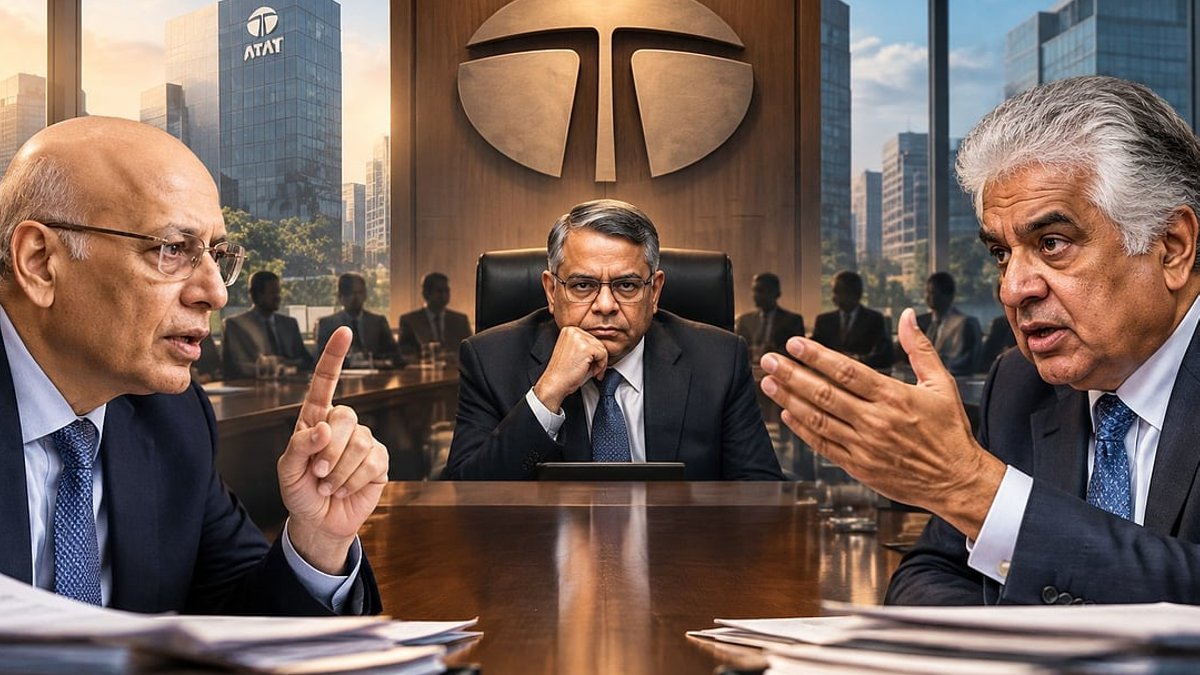
The Tata Sons boardroom dispute has become a legal confrontation between two prominent advocates, each offering opposing interpretations of the company’s Articles of Association. At its core, the conflict centers on the September 17 board meeting, where the two Tata Trusts nominee directors—Noel Tata and Venu Srinivasan—cast split votes on N Chandrasekaran’s reappointment. This division left the board evenly divided, but Chandrasekaran secured reappointment after the Chairman’s casting vote broke the deadlock.
The legal debate centers on Article 121, a provision examined by the Supreme Court in the 2021 Tata-Mistry judgment. This rule requires the affirmative vote of a majority of directors appointed under Article 104B for specified matters. Abhishek Manu Singhvi, representing the Trusts, argues that the 1-1 split between the two nominees meant the required affirmative support was missing.
Singhvi’s position extends to Article 115, which he interprets as requiring a quorum of affirmative votes before proceeding. In a CNN-News18 interview, he stated the absence of unanimous support from the Trusts’ nominees meant the board was improperly constituted to consider the matter. While this interpretation has not been tested in court, it forms the foundation of the Trusts’ challenge to the reappointment.
Harish Salve, Chandrasekaran’s counsel, rejects this reading entirely. He emphasizes the casting-vote provision in Article 121, arguing that the board’s mechanism for resolving deadlocks cannot be bypassed by procedural objections. In his own CNN-News18 remarks, Salve framed the issue as one of operational necessity, warning that allowing a single dissenting vote from a nominee to block the board would paralyze Tata Sons without justification.
The dispute highlights deeper disagreements over nominee directors’ roles and their fiduciary obligations. Singhvi argues that the special position of Tata Trusts’ nominees cannot be separated from the special provisions governing their role under Tata Sons’ Articles of Association. With only two nominees on the six-member board, a 1-1 split means no majority, he says, and the casting vote cannot override that requirement.
Nominees’ dual duties clash over board authority
Salve counters that nominee directors owe dual fiduciary duties, to both the nominating shareholder and the company itself. He argues their role is not to rubber-stamp the Trusts’ wishes but to act in Tata Sons’ best interests. This creates a conflict: if nominees are viewed as Trusts’ agents, their dissent could block decisions, while independent action reduces their voting bloc’s weight.
Read Also: Businesses Choose Decor to Boost Brand Image
The legal question is whether the casting vote can be used after one Tata Trusts nominee has withheld the affirmative support that Singhvi says Article 121 requires before the matter can proceed before the Tata Sons Board.
The stakes extend beyond the boardroom, as Tata Trusts holds 66% of Tata Sons’ shares but influences decisions through just two directors. Singhvi has framed this as a structural imbalance, where the Trusts’ governance rights are being eroded by interpretations favoring board majority over shareholder consent. In a September 20 post on X, he said that “fundamental rights of shareholder-owners cannot be nullified”.
The broader question of Tata Sons’ potential listing remains in the background. Singhvi has described listing as a “red herring” in the Chairman appointment dispute, arguing that the question of Tata Sons’ listing is separate from whether Chandrasekaran could be reappointed. The Reserve Bank of India’s rejection of Tata Sons’ request to surrender its core investment company status on September 11 further complicates the timeline.
Legal questions hinge on votes, committees, and deadlocks
The immediate legal battle focuses on three questions: Did the 1-1 split between Tata Trusts’ nominees meet Article 121’s requirements? Can the casting vote resolve a deadlock when required affirmative support was missing? And did Chandrasekaran’s fresh five-year term require the formal appointment process outlined in the Articles? Singhvi argues the latter is critical, citing a legal opinion by former Chief Justice D.Y. Chandrachud to support the need for a selection committee, a process followed during Chandrasekaran’s 2022 reappointment.
Salve has not yet detailed his counterargument on this point but has dismissed Singhvi’s framing as overly technical. In an NDTV interview, he acknowledged the Articles of Association do not explicitly mandate a committee for every reappointment but emphasized the board’s discretion remains intact.
The Trusts have not yet filed formal legal action.

Businesses Choose Decor to Boost Brand Image


