


India’s consumers trade down but seek quality in FMCG shift
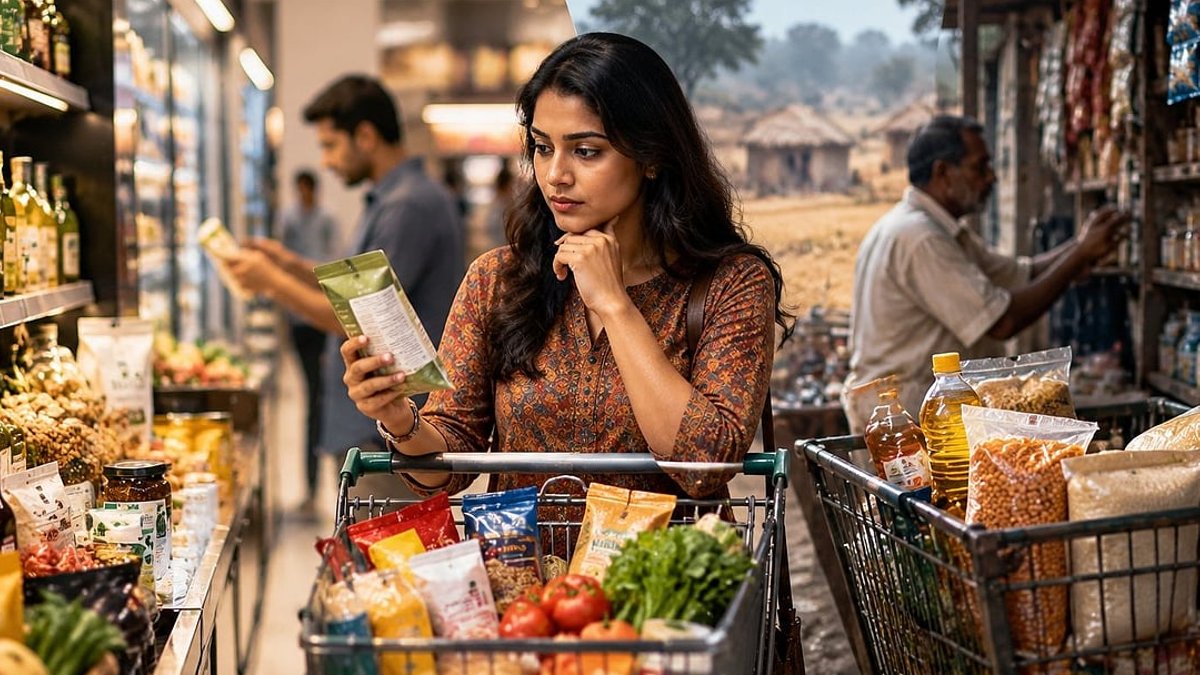
India’s fast-moving consumer goods (FMCG) market is slowing in a way that doesn’t fit the usual playbook. While volumes fell 2% in the second quarter of fiscal year 2026, value actually grew 0.8%, thanks to 2.8% price increases. The gap reveals a deeper shift: consumers aren’t cutting spending uniformly. Instead, they’re making deliberate choices—trading down in some categories, holding firm on others, and shifting where they shop.
The latest data from NielsenIQ (NIQ) shows 68% of FMCG categories saw volume declines in April-June, with 33% of those dropping by more than 5%. Food, still the largest share at 64% of value, held up better than home and personal care, which fell 4.3%. Over-the-counter products dropped 5%, while food prices rose just 2% compared to 5.4% for home and personal care.
Consumers are also redefining what “value” means. Price alone no longer drives decisions. At Adya Organics, Managing Director Pallavi Sinha notes that consumers are increasingly asking about the value they receive. This is pushing demand toward products with clearer sourcing, processing transparency, or perceived quality, especially in ghee, oils, and staples. Two Brothers India Farms’ co-founder Satyajit Hange sees interest rising in heirloom wheat and cold-pressed oils, where shoppers question supply chains as much as cost.
Read Also: Crude Oil Surge Sparks Indian Market Slump
Where the Pressure Hits Hardest
Rural India is feeling the strain most acutely. NIQ’s data shows rural FMCG volumes dropped 5% in the quarter, while urban volumes barely moved (0.1%). Rural value fell 2.9%, compared to 3% growth in cities.
Traditional trade is also under siege. Offline channels saw 4.2% less value and 6% lower volumes, while modern trade and e-commerce surged. E-commerce alone grew 57.7% in value and 34.8% in volume, now accounting for 7% of national FMCG sales. Non-metros are driving much of that growth, though metros still dominate 68% of e-commerce spending.
A Festive Blip, Not a Recovery
FMCG demand may rise 9–11% this festive season, but consumers will remain selective in their spending.
Read Also: CineNow’s Dalmia Leverages Institutional Investors to Reform Film Financing
The Rural-Urban Divide and Offline Collapse
Rural India’s FMCG slowdown is deeper than urban markets, with volumes down 5% in April-June, while urban volumes remained nearly flat at 0.1%. The rural decline isn’t just a shift in shopping habits; it reflects broader income constraints. Core regions like western India and the Hindi heartland, where smaller manufacturers dominate, saw 86% of the offline FMCG contraction. Unlike urban areas, where consumers can more easily pivot to premium or imported brands, rural shoppers have fewer alternatives when staple prices rise.
Consumer Strategies and Channel Shifts Reshape FMCG Demand
Households are adjusting spending habits in ways that go beyond simple price reductions. Some categories see smaller, more frequent purchases, while others experience outright cutbacks. For discretionary items, consumers either switch to lower-cost alternatives or delay purchases altogether. This uneven response means the overall 2% volume decline does not reflect a uniform reduction in spending but rather a mix of trade-offs across different products.
Festive Demand: Stocking Up, Not Upgrading
The upcoming festive season will see online FMCG sales rise 25–29% to ₹1.50–1.55 lakh crore, but the growth will be concentrated in frequency, not basket size. Datum Intelligence projects the increase will come from more orders, not larger purchases, meaning consumers are buying more often but not spending more per transaction. During Navratri, Pluckk observed 20% more units per order and 12% larger pack sizes, but per-unit prices stayed flat, confirming that festive demand is about stocking essentials, not trading up.

Crude Oil Surge Sparks Indian Market Slump


